
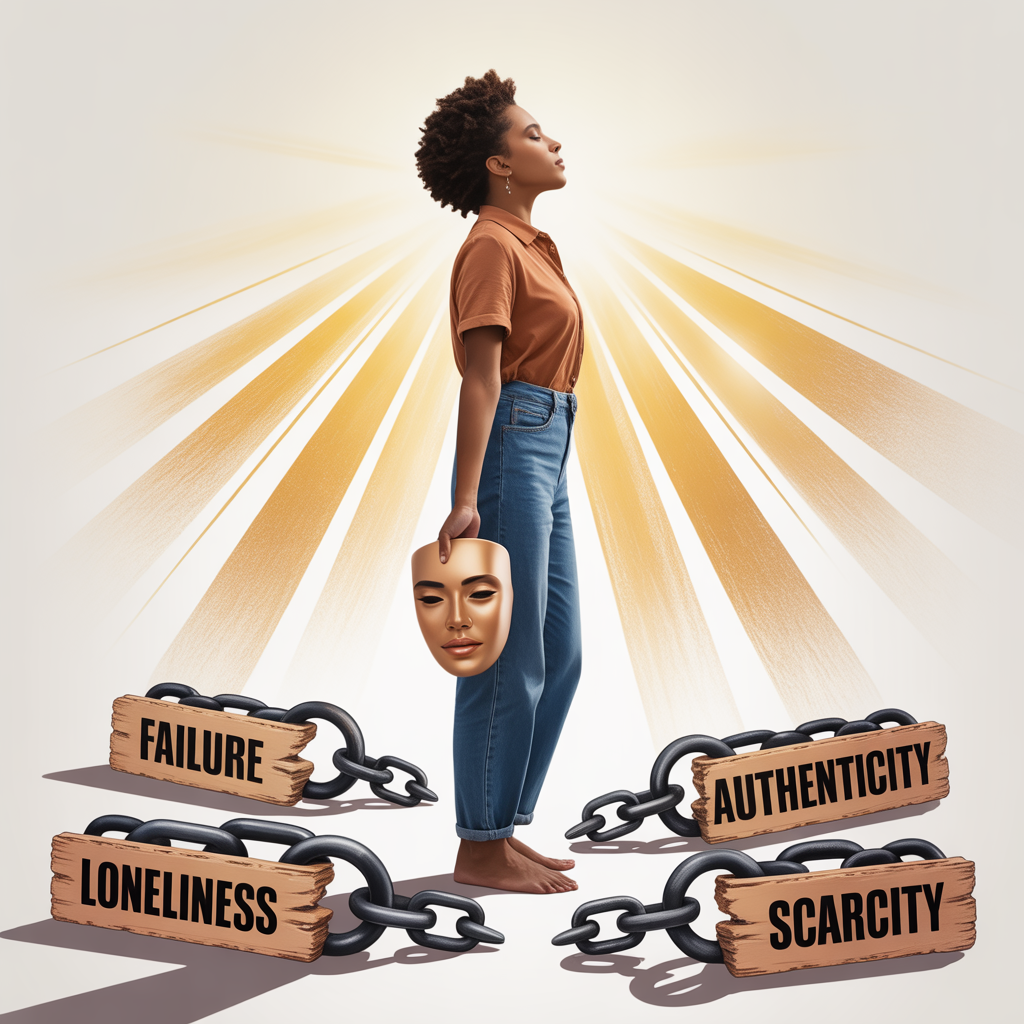
When we hear the word hostage, it doesn’t bring delight. It speaks of force, stolen will, bondage, restriction, confinement, and isolation. It is being removed from the people and things that matter most, trapped in a place of pain. Fear can feel exactly like that. It sneaks in, ensnares you, and takes away the freedom you once had.
Scripture reminds us: “For God has not given us a spirit of fear, but of power and of love and of a sound mind” (2 Timothy 1:7). Yet many of us still wrestle with fears that hold us captive.
Fear of Failure
Failure is one of the most common fears. It shows up in different ways. Sometimes it stops you in your tracks, keeping you from stepping into the very opportunities God has prepared. At other times, unexpected changes make the fear heavier, because they seem to disrupt the plans you carefully laid out. You may chase after things you call success, but they are not always the paths God intended for you. And often, the fear grows because you worry about disappointing others.
Gideon knew this fear well. Israel was oppressed by the Midianites, and Gideon was hiding in a winepress, threshing wheat in secret. When God called him to lead Israel, his first response was doubt: “But Lord, how can I save Israel? My clan is the weakest in Manasseh, and I am the least in my family” (Judges 6:15). Gideon felt inadequate, hostage to the fear that he wasn’t enough. Even after God’s assurance, Gideon asked for repeated signs — the fleece wet one night, dry the next — because he feared failure.
Yet God redefined success for him. He reduced Gideon’s army from thousands to just 300 men, proving that victory would come not from human strength but from divine presence. “I will be with you, and you will strike down all the Midianites” (Judges 6:16).
Response: Redefine success through obedience. Trust God’s presence over your own strength. Take small steps forward even when you feel inadequate, knowing that He who began a good work in you will carry it to completion (Philippians 1:6).
Sometimes fear doesn’t stop us with failure, but with silence — when we hide who we really are. That’s where the fear of authenticity comes in.
Fear of Being Yourself
Another fear that holds many hostage today is the fear of being authentic. In our current climate, people hesitate to show who they truly are — flaws and all. They worry about what others will say, whether opportunities will be withheld, or whether relationships will be lost. Inauthenticity silences your true voice. When you hide behind masks, others hear echoes of someone else, not you. It leaves you vulnerable to manipulation, suppression, and victimization.
Paul’s life is a powerful example of authenticity redeemed. Before his encounter with Christ, Paul (then Saul) was full of passion and zeal, but it was misdirected — he persecuted the church with intensity (Acts 8:3). After his conversion, Paul changed in many ways to fit his new life in Christ, but he did not lose his passion or zeal. Instead, he showed up for Christ with the same fire, now redirected toward preaching the gospel, planting churches, and defending the faith. His authenticity was not erased; it was transformed.
This is the lesson: you don’t have to fear being yourself when you are rooted in Christ. Knowing God teaches you to know yourself. As you walk with Him, He begins to peel back the stains from your background, your past, and your pain — the false identities you’ve picked up along the way. Slowly, the person He created you to be emerges — whole, free, and authentic. “For we are God’s handiwork, created in Christ Jesus to do good works” (Ephesians 2:10).
Response: Accept yourself as God’s handiwork. Allow Him to peel back the stains of your past and reveal the true you. Show up with your redeemed passion and zeal, knowing that your authentic voice is the one He intends to be heard.
Even when we show up authentically, another fear can creep in — the fear of walking alone, of feeling unsupported in the journey.
Fear of Walking Alone
Another fear that often holds us hostage is the fear of walking alone. You may have people around you, but not many who truly stand with you, fight for you, or believe in your vision. When the journey feels lonely, it can seem like you’re trapped in isolation — like being in a broken farmhouse in the middle of a forest with no signal and no one to call.
Elijah felt this fear deeply. After his great victory on Mount Carmel, where fire fell from heaven and the prophets of Baal were defeated, Elijah fled into the wilderness. Exhausted and overwhelmed, he cried out: “I am the only one left, and now they are trying to kill me too” (1 Kings 19:10). His fear wasn’t just about danger — it was about isolation, the sense that no one stood with him.
But God reminded Elijah that he was not alone. First, He revealed His presence in a gentle whisper, showing Elijah that divine companionship was enough. Then He reassured him that there were still 7,000 in Israel who had not bowed to Baal (1 Kings 19:18).
Response: Lean into God’s companionship. Listen for His whisper in your exhaustion. Trust that He has placed allies in your path, even if they are not yet visible.
And when loneliness weighs heavy, scarcity often joins it — the fear that we don’t have enough to continue.
Fear of Scarcity
Scarcity is another fear that can hold us hostage — the fear of not having enough time, resources, or strength to continue. It whispers that your vision will fail because you lack what others seem to have in abundance.
The widow of Zarephath faced this fear. With only a handful of flour and a little oil, she believed she and her son would eat one last meal and then die (1 Kings 17:12). Scarcity had her hostage. Yet God multiplied her resources through Elijah’s word: “The jar of flour will not be used up and the jug of oil will not run dry” (1 Kings 17:14). What seemed insufficient became more than enough.
Response: Trust God’s provision. Remember that He multiplies small resources and meets needs in unexpected ways. “My God will meet all your needs according to the riches of His glory in Christ Jesus” (Philippians 4:19).
Breaking Free
Fear is a thief, but it doesn’t have to be your master. Gideon shows us that failure is not final when God is with us. Paul teaches us that authenticity is not something to fear, but something to embrace as God restores and redeems us. Elijah reminds us that loneliness is answered by God’s presence. The widow teaches us that scarcity is met with divine provision.
“So if the Son sets you free, you will be free indeed” (John 8:36).
Reflection for You
I have had to deal with my own fears, especially the fear of failure. For years, that fear drove me to pursue higher education and courses on many topics. Of course, they helped me to be diverse in my thinking and conversations, but the motivation was wrong. I had to learn to redefine success according to God’s way. While I still study, the motivation now is aligned with His will for my life.
I even write of trepidation and fear in my book Valley Flower: Defeating Oppressive and Non-Progressive Cycles. What about you? Which fear has held you hostage, and how might God be inviting you to redefine it today?
This reflection is part of my author journey at Plunkett Writes. You can also follow along on Instagram @plunkettwrites, where I share my writing journey.